CAC · Exhibition | Entangled: bio/media
ARTISTS
CAO Shuyi, Mads Bering Christiansen & Jonas Jørgensen, Yunchul Kim, KU Kuang-Yi, YU Chun-LO, and TIEN Zong-Yuan, Ani Liu, Iris Xiaoyu Qu, Anastasiia Raina & HUANG Danlei & Meredith Binnette & Georgina Nolan & HU Yimei, WANG Yueyue, XU Haomin, XI Lei, and Etsuko Yakushimaru
CONCEPT
ZHANG Ga
CURATED BY
CAO Jiamin, BI Xin, ZHANG Ga
Entangled: bio/media
2022.07.30 – 2023.02.06
Chronus Art Center (CAC)
BLDG.18, No.50 Moganshan RD., Shanghai
EXHIBITION OPENING
2022.07.30
ON VIEW
11 am – 6 pm (last entry 5:30 pm)
Wednesdays – Sundays
Free Admission
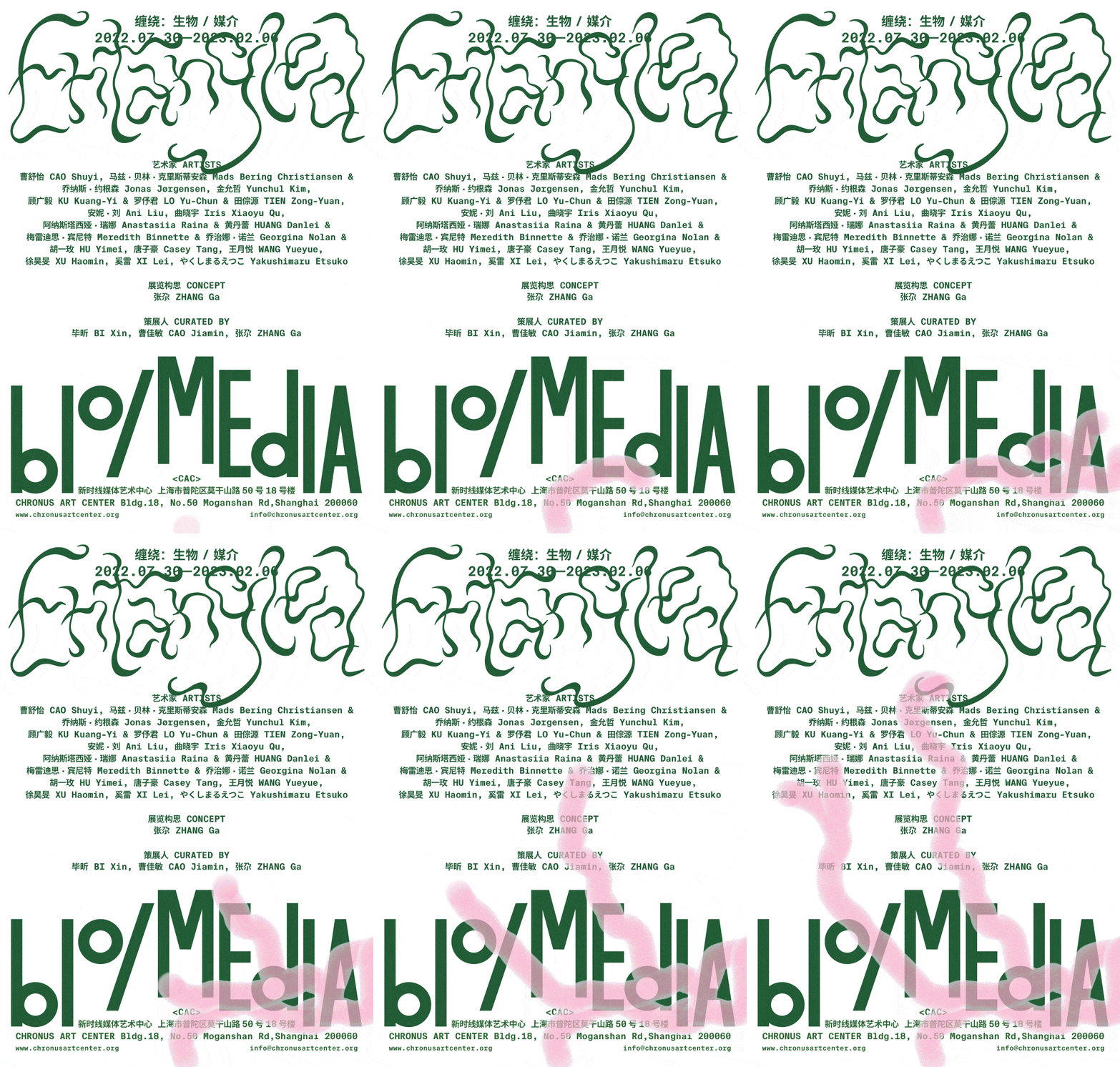
Chronus Art Center is pleased to announce the presentation of Entangled: bio/media, a new exhibition featuring ten groups of artists, including CAO Shuyi, Mads Bering Christiansen & Jonas Jørgensen, Yunchul Kim, KU Kuang-Yi, YU Chun-LO, and TIEN Zong-Yuan, Ani Liu, Iris Xiaoyu Qu, Anastasiia Raina & HUANG Danlei & Meredith Binnette & Georgina Nolan & HU Yimei, WANG Yueyue, XU Haoming, XI Lei, and Etsuko Yakushimaru. Conceived by ZHANG Ga and co-curated by BI Xin, CAO Jiamin and ZHANG Ga.
In 1948, American mathematician Norbert Wiener published Cybernetics, a trailblazing treatise that proposed a theory of control and communication systems compounded by machines and living organisms. Many discussions in the text revolve around the question of which takes priority over the other, but it is also worth noting that the origin of Wiener’s theory is based on his early studies in statistics and the stochastic cosmos. In the book’s very first chapter, “Newtonian and Bergsonian Time”, Wiener anatomized a dynamic world filled with changes, randomness, and probabilities waiting to be actualized, in a break from the tight and mechanical cause-and-effect order defined by classic mathematics and physics. Both the biological and the technological are living in flux; they both possess a certain extent of vitality and variability.
In the development of biotechnology and bioinformatics, the biological process is able to be read, measured, and researched in the formats of information, programs, and codes. Media theorist Eugene Thacker in his book Biomedia (2004) explicated this ongoing recontextualization of a life form that transitions from carbon-based to silicon-based material, as well as the converging of computer science, molecular biology, genetic codes, and computer codes. When a living entity can be interpreted as a medium, the biological process of corporealizing itself is “a process of mediation,” which resonates with Thacker’s principal concept in his media theory that regards mediation as a necessary process for the formation of mediums. From this point of view, a biological system does not function in a reductive manner that would resort to the mechanical Newtonian paradigm. Instead, it evolves in nebulas, myriad particles and related situations that require living organisms to “exist in time, be modulated according to different contexts and situations.”
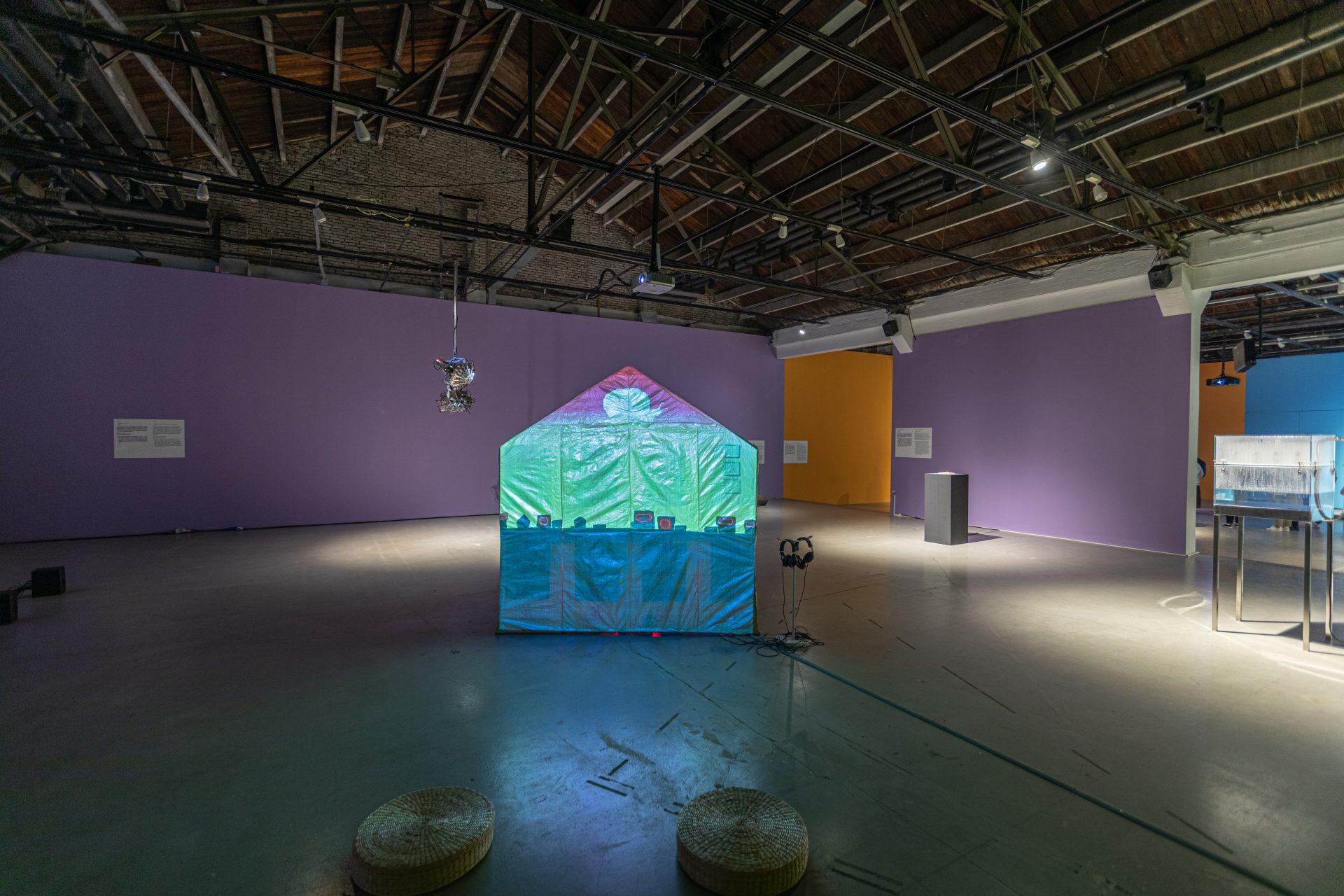
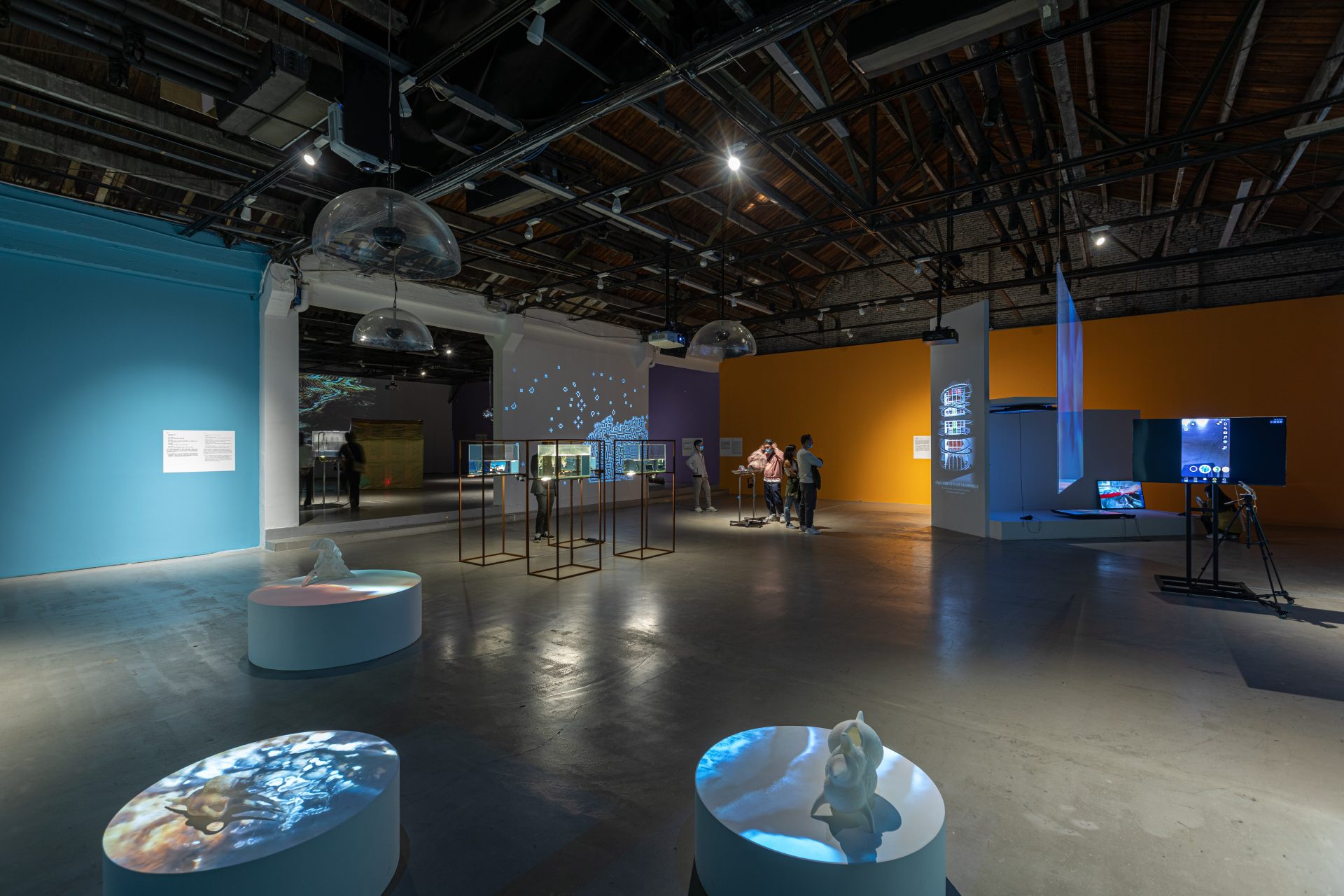
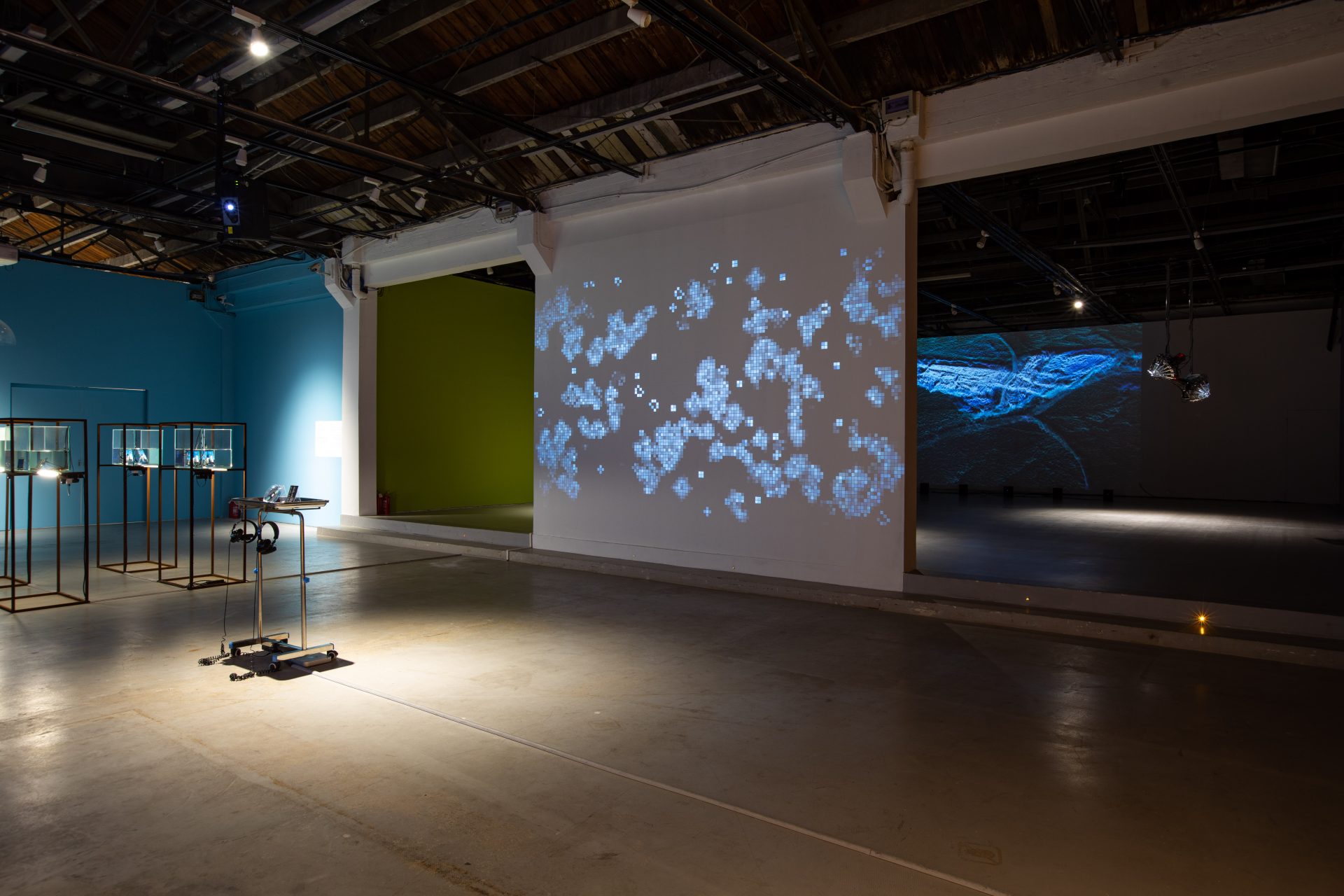
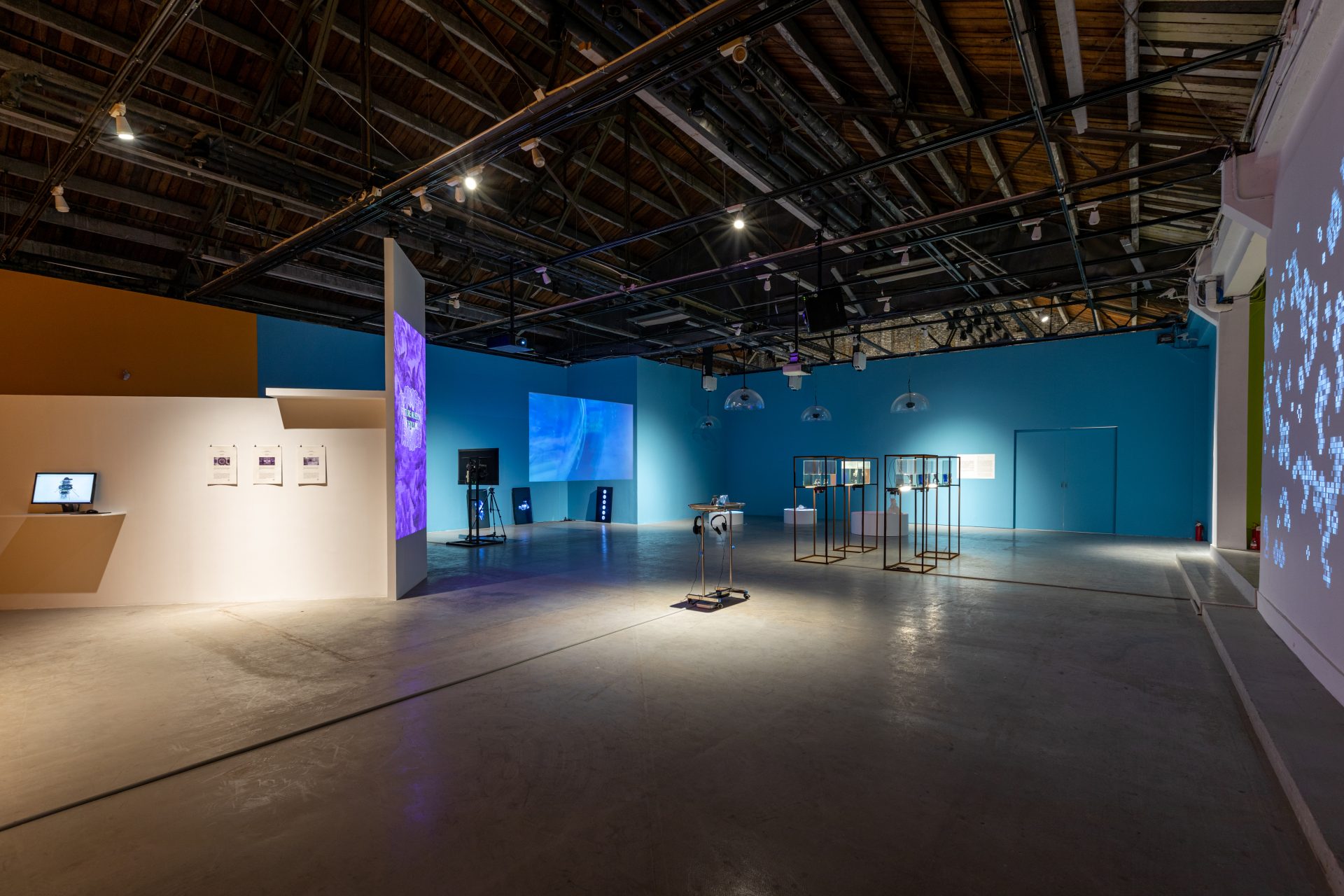
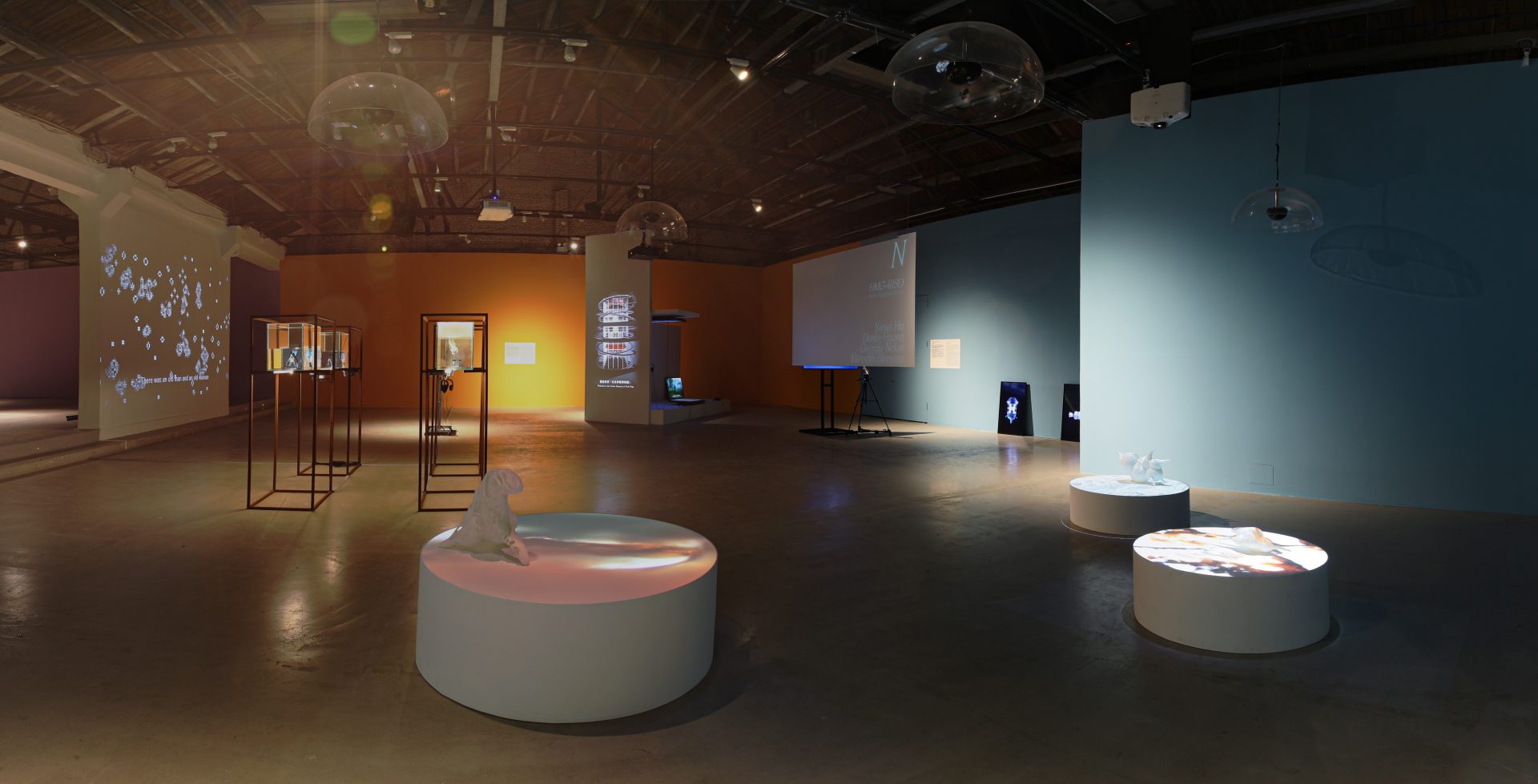
Entangled: bio/media further explored this condition by rethinking the notion of biomedia. Whereas all entities are in the constant process of grasping and adapting to the unpredictable entropic cosmos, the fluctuating, evolving, and compilable materiality of nature is also reflected in the organization and execution of information, programs, and codes. A unique perspective for the exploration of the biophilic properties in artificial intelligence, electronics, algorithms, and informatics is of great importance. The exhibition Entangled: bio/media was as a contemplation and enactment of this perspective. By unveiling the participating art projects progressively throughout the duration of the exhibition in four phases: Transcoding, Evolution, Agentic Entity, and Symbiosis, the exhibition not only elevated and liberated bioart from an art discipline that works primarily with bacteria, genetic, or transgenic material via technological means, but also responded to urgent contemporary inquiries including transformative substrates and the definition of life, the shifting paradigms of the evolving natural process, the emerging agency mediated by both the biological and technological milieus, and the yearning for a symbiotic relationship between physical beings (so-called nature), technical beings (the artificial namesake), and psychic beings (living things), to rethink a Simondonian concept in a post-human world order.
Transcoding
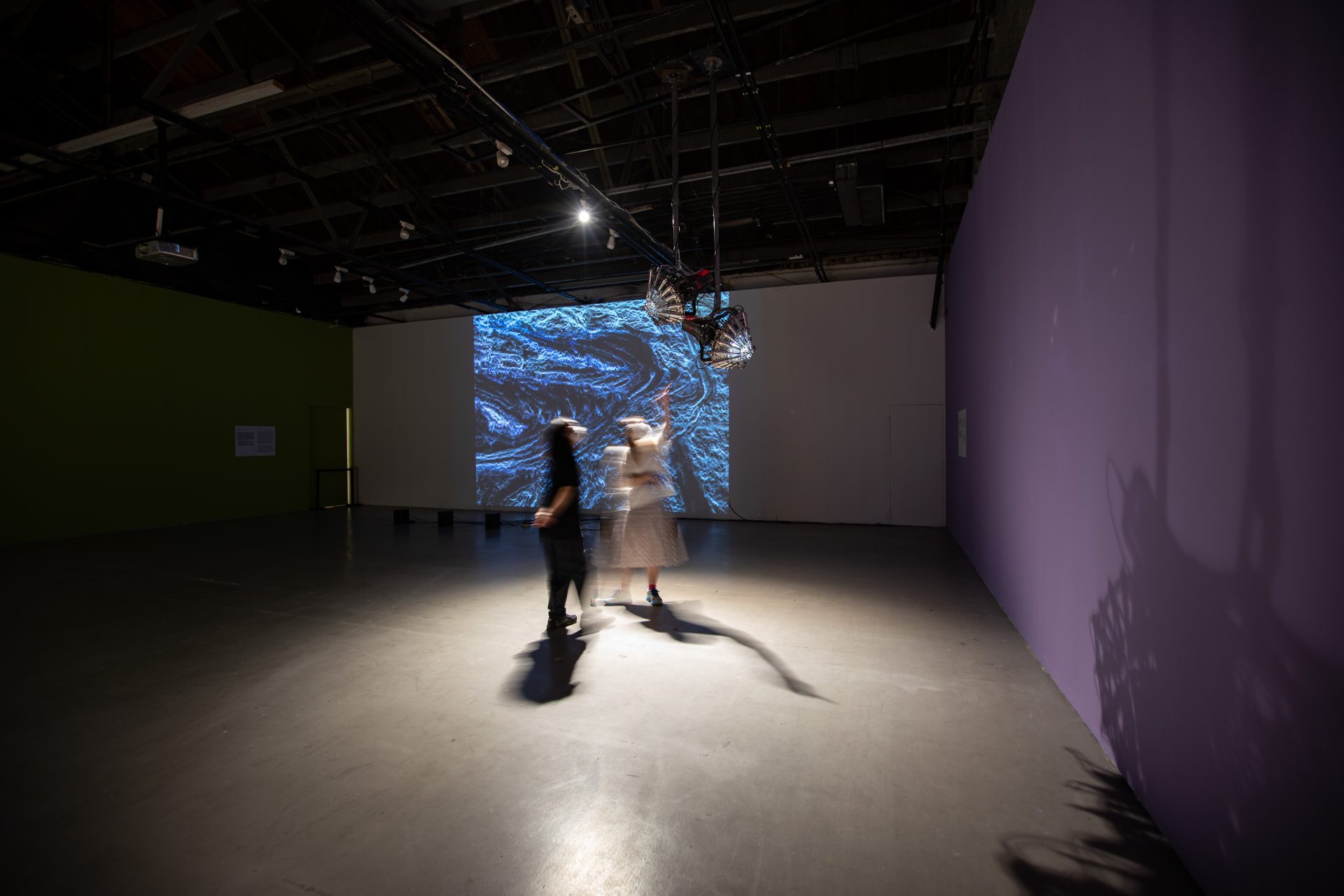
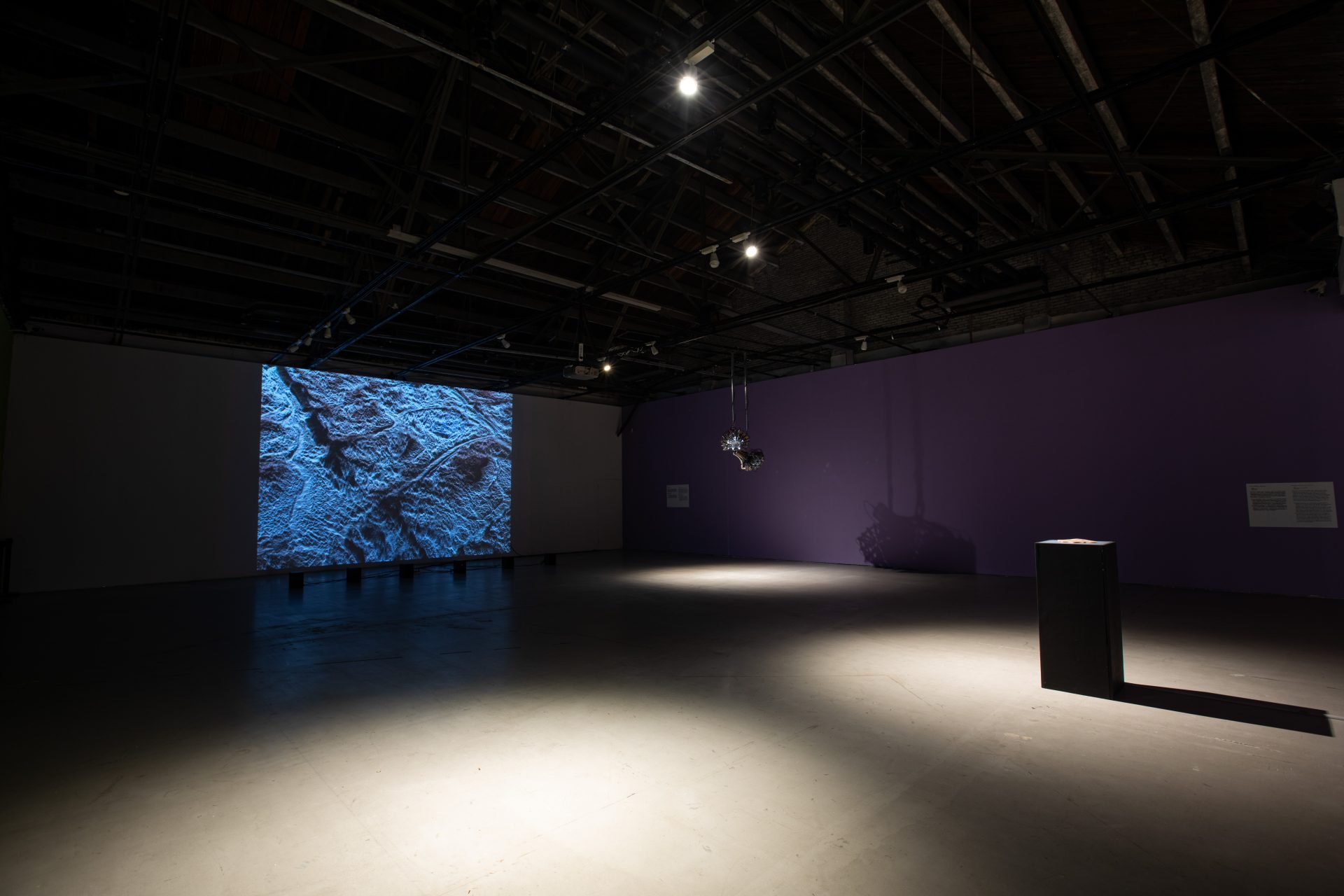
When the fabric of life is transformed between different material substrates, are these new spaces to expand the interpretation of the meaning of life? By re-examining the theory of inorganic matter possessing its own “intelligence” in the form of autopoiesis, Cao Shuyi’s works Ephemeroptera and Foram explored the self-growth and self-aware construction of inorganic objects in ancient landforms. She saw their complex ecology as a thought process that will disrupt the definition of the default model of intelligence. Through her research and practices, Cao called for an open machine intelligence ecology that incorporates reciprocal aesthetics and planetary thinking into Artificial Intelligence and Machine Learning.
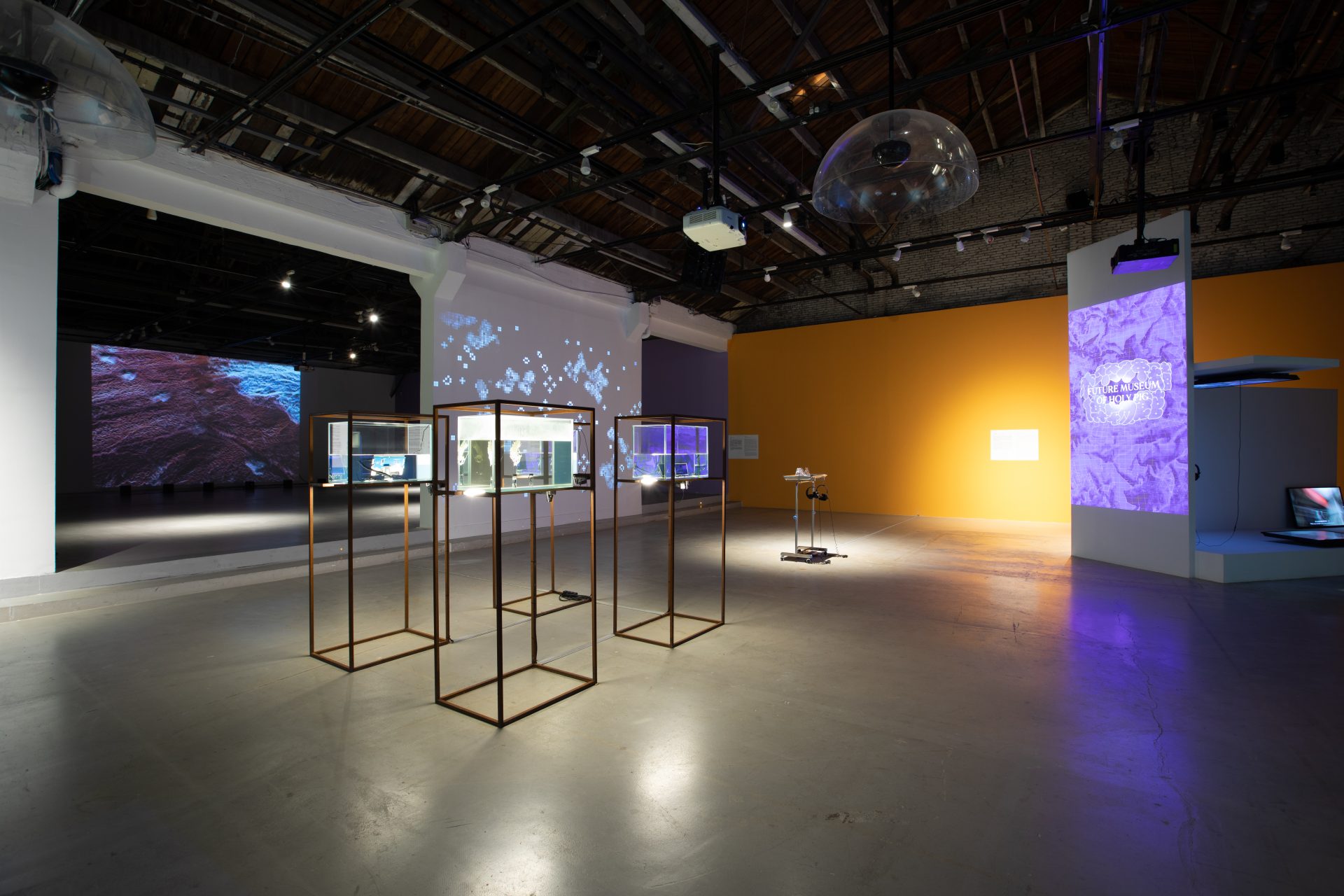
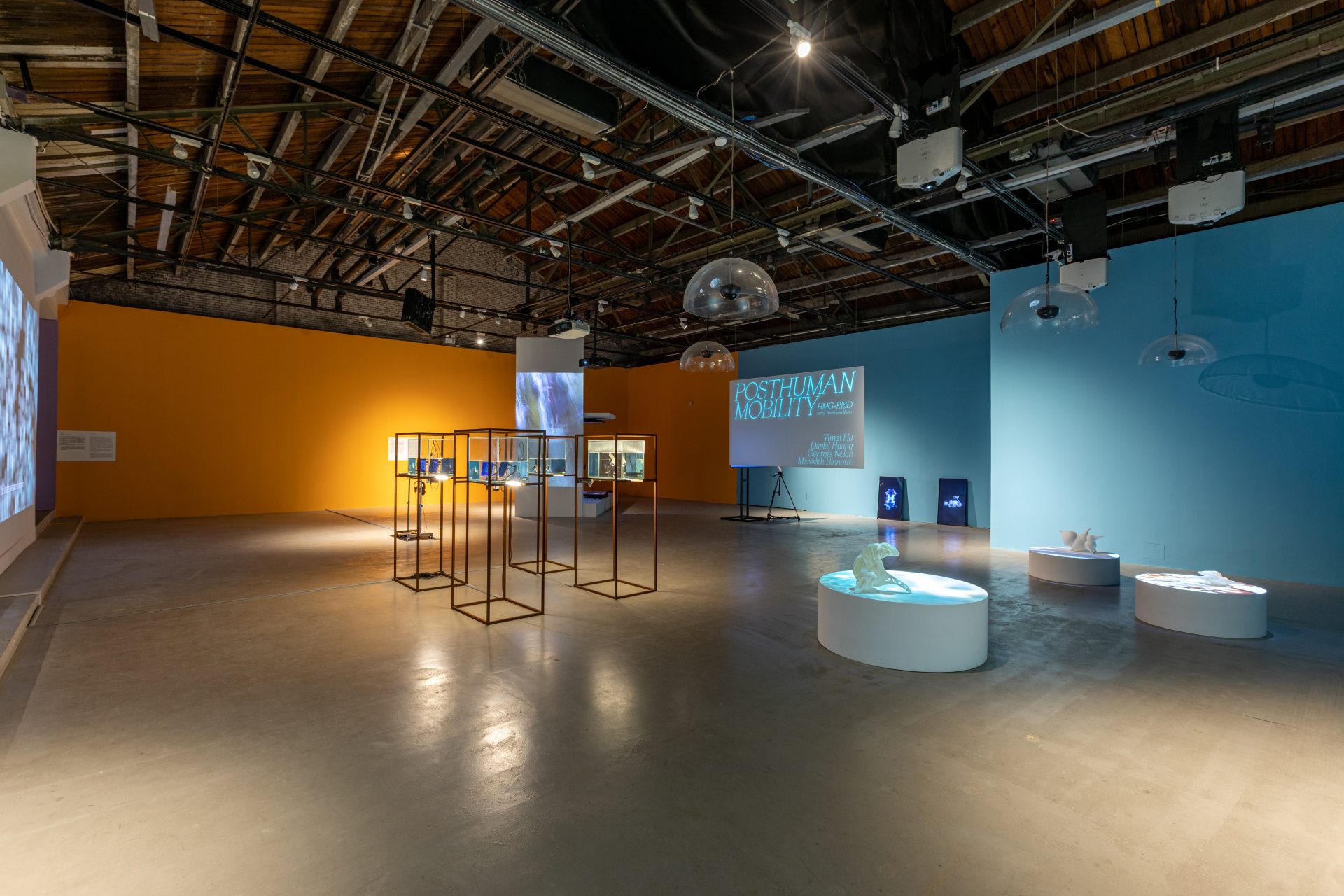
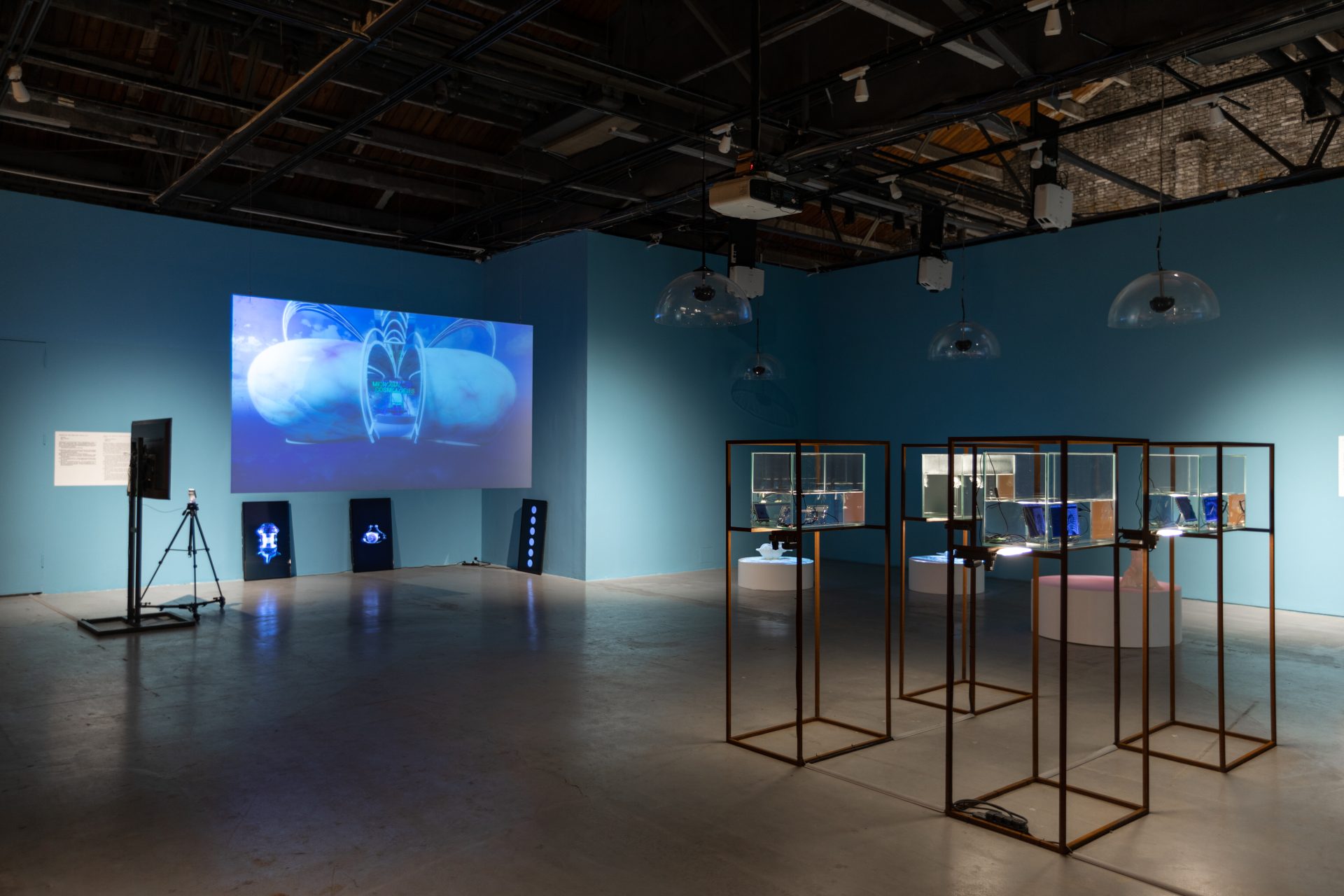
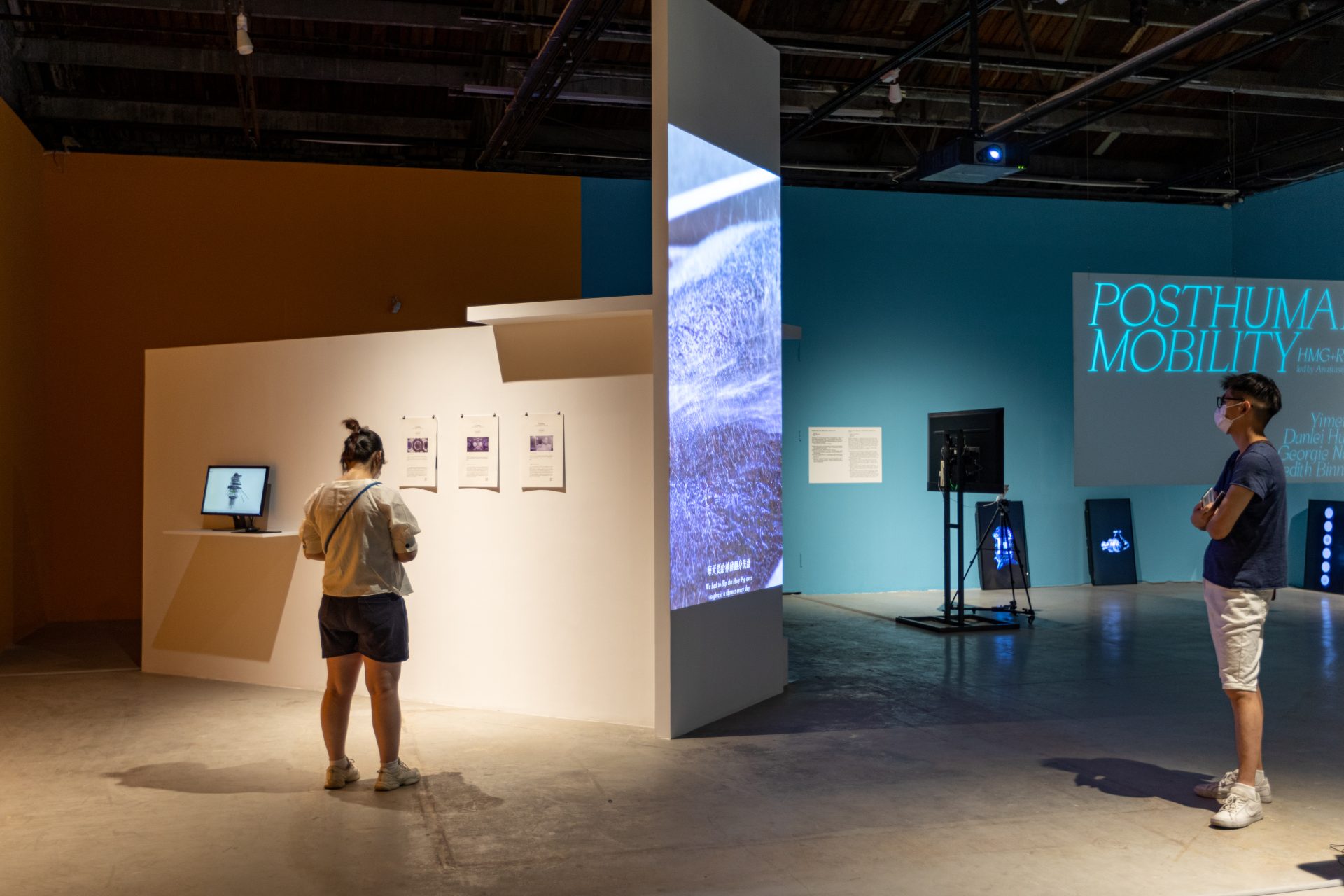
This chapter also explored the dynamic relationship between the human body and technology, in a computational, data-based, and algorithm-driven society. Ani Liu’s work, A Search for Ghosts in the Meat Machine, examined the extent to which human body can be integrated and transformed through non-organic forms using anatomy, genetics, behaviour, algorithms, and personal narratives. The artist cross-referenced her own body with electronic parts, screens, and 3D-printed objects that had been submerged in liquid to explore whether emotion, perception, and subjectivity could be produced and shaped in codes, devices, and labs. While Ani Liu focused on the feedback loop between the plasticity of consciousness and technological iterations, the five artists and designers from Rhode Island School of Design in Microbial Cosmologies (Anastasiia Raina & HUANG Danlei & Meredith Binnette & Georgina Nolan & HU Yimei) adopted a non-anthropocentric perspective to speculate on a society transcoded with biocentric materiality. Taking microbes as research objects, they explored the future of mobility in the context of a global pandemic by redefining the notions of identity, boundaries, the currency system, and citizenship in the posthuman era.
Evolution
Assuming that living beings can act as media, and that media can take on the characteristics of living beings, how to distinguish between life and code, nature and the artificial, organisms and bits? Based on the concept of “post-humanity music”, Yakushimaru Etsuko’s project I’m Humanity considered DNA sequences as a medium for storing music. By converting musical information into the genetic codes of cyanobacteria, I’m Humanity entered a dynamic evolutionary process during which not only the musical information was likely to mutate, but also its cultural message might be derived, altered, and even replaced.
KU Kuang-Yi, LO Yu-Chun, and TIEN Zong-Yuan’s collaborative work Future Museum of Holy Pig further explored the evolution of biomedia within a cultural dimension. The artists posited a science-fiction scenario in which, after the year 2020, there will exist numerous parallel worlds that cultivate pigs by means of cutting-edge technology, with pigs being on the verge of extinction. Through exchanges of conflicting views, the demonstration of architectural engineering drawings, and their fanciful imagination, this conceptual museum delved into the dynamic relationship between folk customs, technology, and the natural environment.
When technical objects are mediated by biological characteristics in the likes of evolution, variability, and plasticity, its “process of mediation” may approach a “natural technical evolution” as described by French Philosopher Gilbert Simondon in his book On the Mode of Existence of Technical Objects:
“The primitive technical object can be considered as a non-saturated system. Whatever later improvements it undergoes act as steps forward towards the saturation of the system. Judging from the outside, it is possible to believe that, instead of being improved, the technical object is becoming altered and is changing its structure …… Its relationship with other objects, whether technical or natural, becomes the influence which regulates it and which makes it possible for the conditions of functioning to be self-sustaining.” (1958)
This is how a technical process evolves into autopoiesis. However, technology is not merely a heterotopian imitation of nature. Simondon later stated in his essay: “it can be schematically different from all natural structures.” (1958) A further level of “self-creation” is characterized by the artificial entity’s quality of agency, autonomy, and even subjectivity in inorganic existence. Meanwhile, we should be aware of not getting trapped by the competition between artificial and natural intelligence. Whereas all entities are constantly in the process of grasping and adapting to the unpredictable entropic cosmos, the notion of manipulation inscribed with the hegemonic regime has been proven to be futile.
Agentic Entity
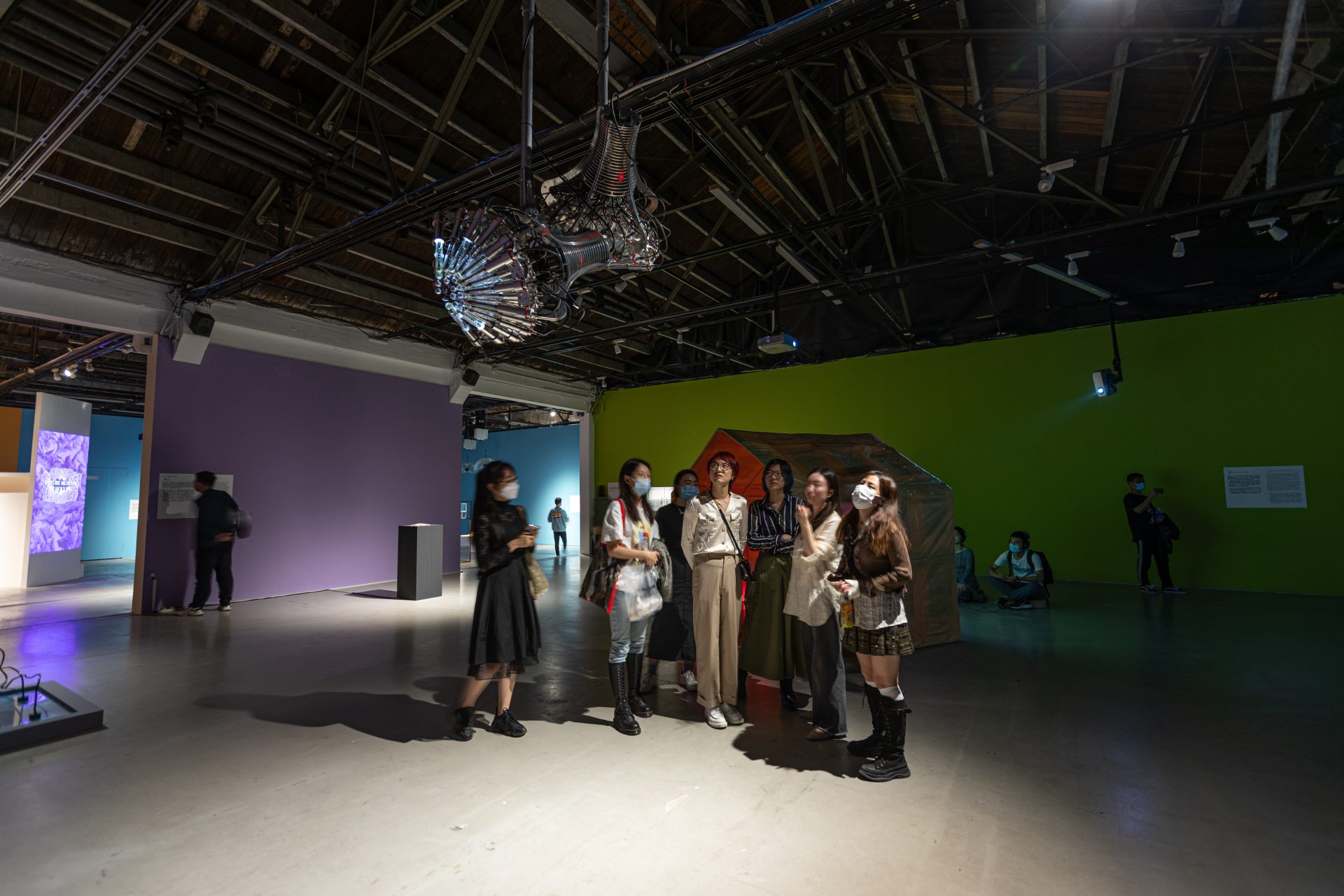
This chapter stressed on the vitality and autonomy within nature, inorganic matters, and artificial life, expanding our understanding of life. Yunchul Kim’s Argos considered machines as a non-human agency. This piece was composed of 41 Geiger–Müller tubes, presented as a single living organism, a blinking light that detected particles of the universe. Argos was not a stationary machine but a dynamic architectural structure in constant interaction between cosmic radiation and vibrational impulses. If Kim’s work was an exploration of the relationships between metaphor and materiality, then Bering Christiansen and Joans Jorgensen’s work reconsidered the relationships between language and object. SONŌ explored the impact of language in the realm of human-robot interactions. Based on the artists’ research, sound signals are a potentially more effective medium for conveying emotion than vision in social robotics. This work pointed to the questions of what life is and what language/sound means to life?
Iris Xiaoyu Qu’s work, the distributed identity of an artificial landscape, constructed a series of artificial landscape and soundscapes to manifest the embodied experience of an AI system. By revealing the ubiquitous hardware infrastructures hidden beneath the light and smart shell of an AI system, Qu intended to retrace its identity scattered on the earth layer. The project hinted at a posthuman turn in which nature and technology entangle with each other. From here, the exhibition stepped towards the next chapter: Symbiosis.
Symbiosis
This chapter provided further insights into the convergence and interdependence of organic and artificial life, developing an understanding and discussion of the complexity and recontextualization of the bio-mediated construction of multiple relationships from a systematic perspective.
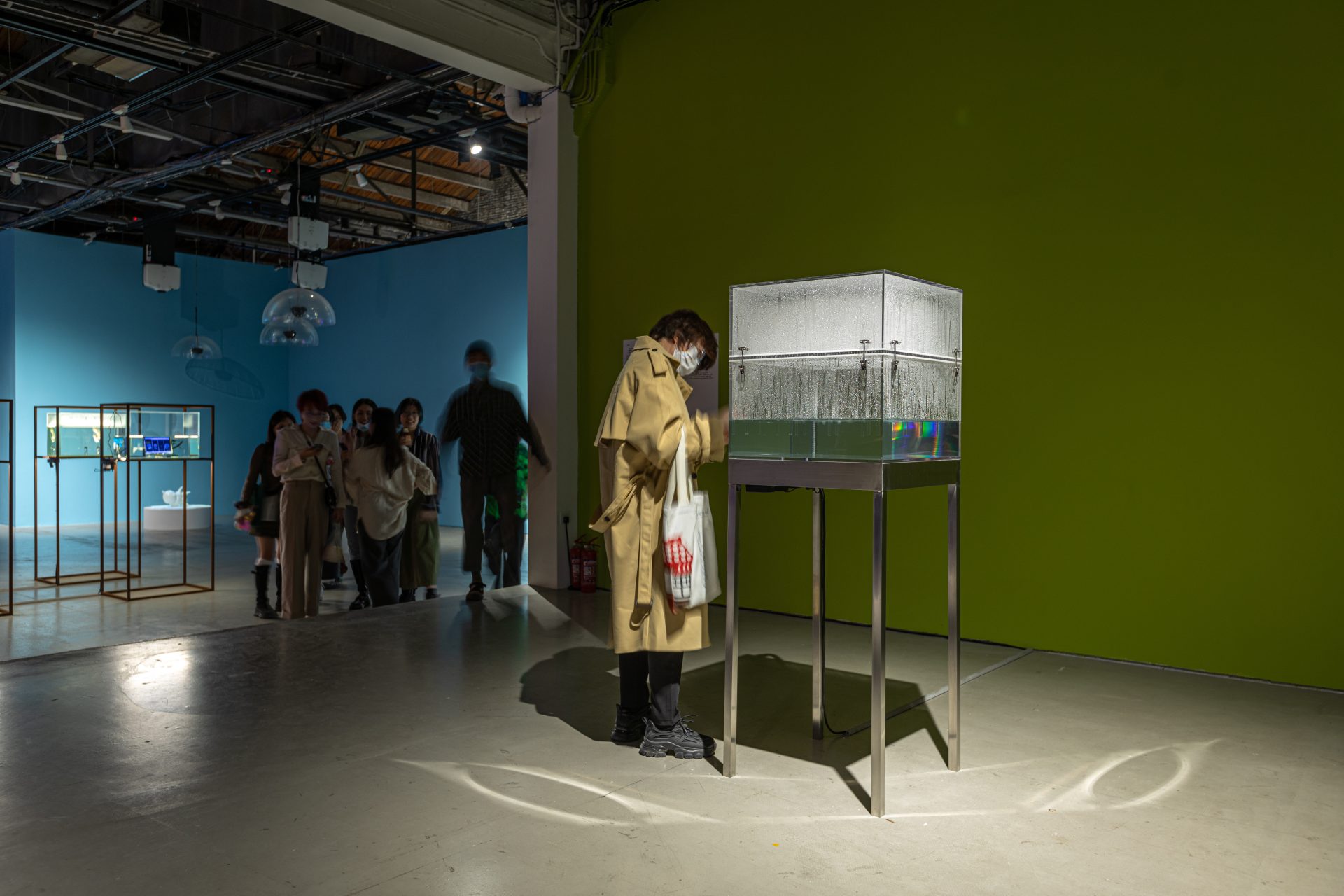
As a reconfiguration of Condensation Cube by Hans Haacke in 1963-1968, the work Clouds congeal into raindrops falling into the sea reflected artist WANG Yueyue’s interest on the generative process of autonomy in a technical object and its embedded systematic operation with its fluxing surroundings, which could resort to the cybernetics movement in the realm of computation, social and political studies, art, among others in the late 20th Century. WANG rediscovered the intersection of biological, ecological, and technological theories by further complicating the interaction between the “cube” and environment with the data of a distant location in future time — the weather forecast data collected from a specific area of the ocean in the artist’s hometown QingDao. The fluxing relationship between a technological self and a remote ecological system, the one without nature, was presented to viewrs in a “cube”.
XI Lei’s research project Why Sangyuan Polder? centered around the following questions: what is the role of traditional water-related techniques and technologies in today? Do they have the potential to lead us beyond the “land-centrism” that underpins modern concretized formation of technical objects? By focusing on the internal tension existing between the traditional and modern technological water infrastructures, the project shed light on the hoped-for symbiotic development powered by technology and integrated with nature in relation to social and economic values.
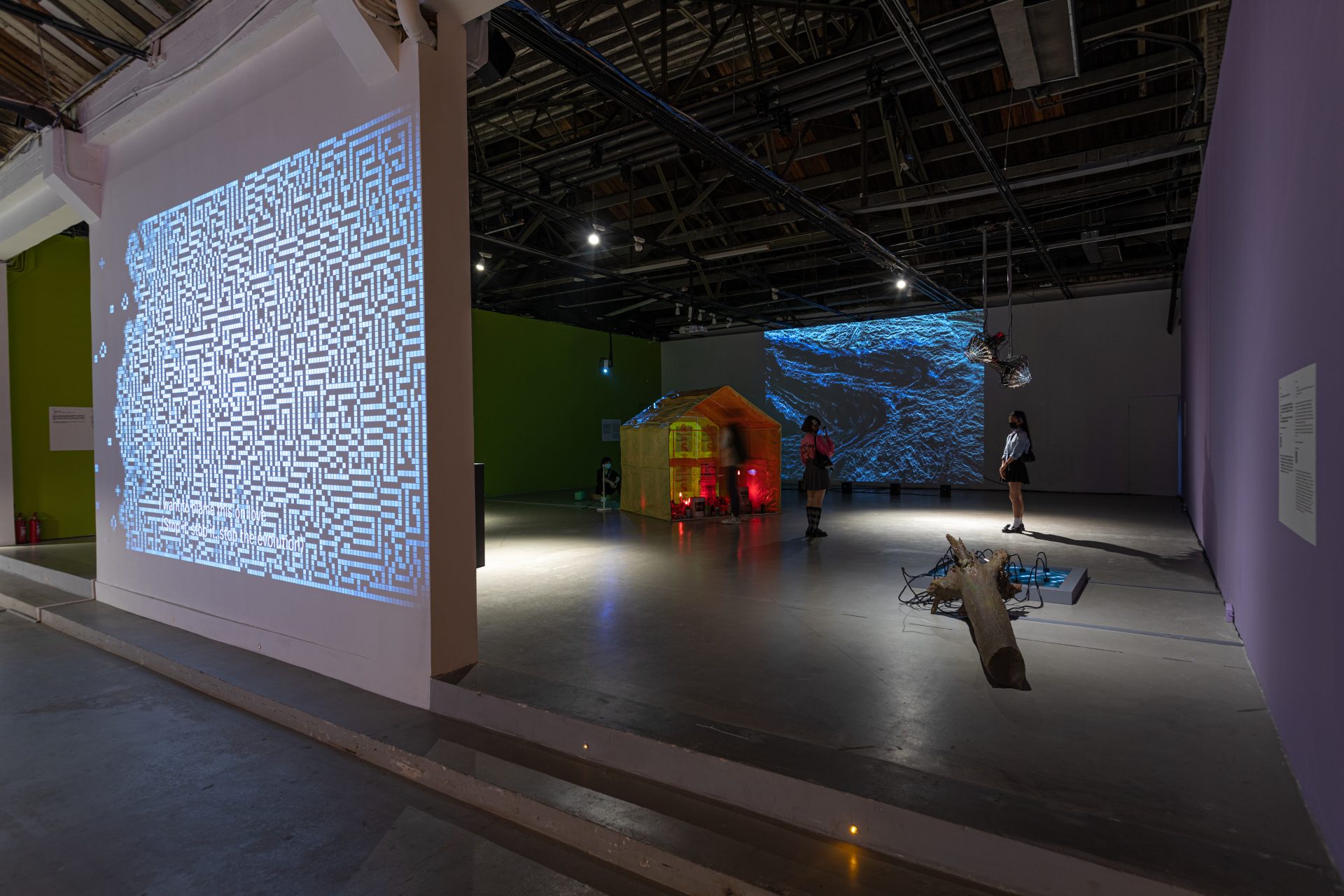
Meanwhile, in Rootless Tree, XU Haomin took a step further to question the conception of symbiosis that may be another utopia framed by human desire. The piece presented a bleak scenario with an uprooted tree. Noises and compressed chaotic images referring to a dark ecology urged us to rethink the conventional way of knowing maintained by the humanities. Are human beings really capable of grasping the geological deep time and the accelerating development of technology? Or, are we just doing it by means of manipulation, which is actually verging on losing the helm? To understand the symbiotic reality is to find ways of tuning between human and non-human, the self and the other, norms and alterity.
Thacker states in Biomedia that biology has become ever more biological through the mediation of technology. The corporealization of nature is strengthened across different substrates. Technology, on the other hand, emerges as a kind of “self” transcendence beyond the dualism of nature and technology through the mediation of biology/nature, which learns to “exist in time” together with biological beings in this entangled world. Based on this vision of the “co-naturality” (Simondon, 2009) between the natural and technological milieu, the exhibition Entangled: bio/media revealed an alternative reality, seeking the potentials of all beings comingling and co-existing in symbiosis, thus to witness the emergence of the unique agentiality of each cohabitant on the earth.
ARTISTS
CAO Shuyi, Mads Bering Christiansen & Jonas Jørgensen, Yunchul Kim, KU Kuang-Yi, YU Chun-LO, and TIEN Zong-Yuan, Ani Liu, Iris Xiaoyu Qu, Anastasiia Raina & HUANG Danlei & Meredith Binnette & Georgina Nolan & HU Yimei, WANG Yueyue, XU Haomin, XI Lei, and Etsuko Yakushimaru
CONCEPT
ZHANG Ga
CURATED BY
CAO Jiamin, BI Xin, ZHANG Ga
Entangled: bio/media
2022.07.30 – 2023.02.06
Chronus Art Center (CAC)
BLDG.18, No.50 Moganshan RD., Shanghai
EXHIBITION OPENING
2022.07.30
ON VIEW
11 am – 6 pm (last entry 5:30 pm)
Wednesdays – Sundays
Free Admission